The All-American
It was a cold, blustery January morning. Icicles draped the parking porte-cochère like holiday lights, frozen mid-melt. A rare recent southern winter storm left lacy ice patches on the dormant lawn.
My husband, Richard, and I were picking up his dad, Roger, at his independent living senior apartment building. We were taking him to Waffle House for brunch. Not in my playbook for fine dining, however, it was Roger’s favorite.
And what did he always order? The All-American Breakfast — two eggs, hashed browns, meat of choice, toast, and waffles. Enough for at least a day’s worth of food coma.
He grinned when he saw us. Freshly shaved and showered, his cool skin smelled like sandalwood. A scarlet felt fedora sat jauntily on his full head of snow-white hair.
“Careful there, Wendy,” he said, trying to help me get into the front seat of the car.
“No, you get shotgun,” I replied, gently pressing his back to steady his balance.
Roger was a high school track and football star, later going to college and making the Cornell College teams. He lived his life actively — fishing, golfing, and dancing.
Now I found my physician brain assessing his gait, his memory, and his weight. How long would he be able to remain living independently? At 95, he was worn down by time. His memory sputtered and spit like a failing spark plug. He shuffled. His spine was as bent as a willow branch.
I helped him buckle his seatbelt. He winked. A startling azure-blue, his eyes still shone brightly. And that smile. Charming as a fox!
We drove to Waffle House, Roger giving Richard constant driving instructions during the entire fifteen-minute trip. Parenting is hard-wired.
Richard dropped us at the front door and drove to park the car. Even though we were both bundled against the wind, I could feel Roger’s thinning body shiver as we entered. The ding-dong of the doorbell announced our arrival.
“Welcome to Waffle House!” a chorus of voices rang out.
We breathed in the nutty aroma of baking batter as my sunglasses fogged. The sweet whiff transported me to icy, wintry days on my childhood farm. Frozen fields provided my dad with short reprieves from farmwork.
He would trade his oil-stained work overalls for a threadbare green cardigan and then make me and my four sisters dozens of paper-thin pancakes, served steaming on a huge antique glass platter.
I turned to Roger. “Where do you want to sit, Dad?”
Used napkins and toast crumbs littered the floor. The morning rush hour had finished and now only a few tables were occupied.
“Right here,” he said, pointing to the nearest booth with his cane.
He took off, teetering.
I lunged towards him, but his cane steadied him before he could tumble. My shoulders relaxed.
We shrugged off our coats and slid into the booth, soon joined by Richard.
Do you see what I see
“Can I get you coffee, sweetie?” asked the waitress.
“Yes, ma’am,” answered Roger. “How are you doing today?” he asked with a grin.
“Just fine,” she replied with a smile. “Thank you for asking!”
As she poured freshly brewed black java, wisps of steam lifted skywards.
Roger’s strong hands gripped the porcelain mug. He sniffed deeply and then closed his eyes a bit as he gingerly took the first scalding sip.
“What can I get y’all?” she asked. We studied the sticky, two-sided laminated menu. How many people have held this menu? I thought.
“What’s that?” asked Roger, tilting his head towards the waitress. I couldn’t see his hearing aids. Maybe he had forgotten to put them in.
Our server glanced at him. Louder and slower, she repeated, “What would you like to eat?”
“Oh. Ah, this right here,” Roger replied, pointing to a picture of The All-American Breakfast.
“How do you want those eggs?” she asked.
His brows knitted.
“Just like this,” he said, placing a manicured finger over an image of two sunny-side-up eggs.
“You got it!” she said, removing the menus and calling out our order to the cook.
As we waited for the meal, an elderly couple slid onto the booth behind me, dropping their bodies with a thud. I bounced and felt a prick of pain behind my knee. A chipped edge of the worn bench had snagged my leggings. I scooted closer to Richard.
The holidays had just ended, so I thought I’d start a conversation, maybe learning more about his memory at the same time.
“Dad, you know Richard made duck for Christmas dinner. What was a traditional meal when you grew up?”
“Partridge,” he said without hesitation.
“Partridge?” I asked. That was a bird we sang about at Christmas; I hadn’t thought about eating it.
“Yep. I’d fly up to Wisconsin, go hunting by myself, and come back with partridges,” he replied.
One eyebrow lifted as I glanced sidelong at Richard. I had not heard this before.
Roger continued. “Yep, and we had quail and pheasant, too.”
“You shot them?” I again asked, trying to understand if this was a real memory.
He nodded. “Did you have to pull out the shot?” I asked. Having eaten game growing up on a farm, it was my least favorite part of my mom’s holiday goose — that tooth-cracking crunch of buckshot.
Richard added, “I don’t quite remember you going up to Wisconsin at Christmas, Dad.”
“Oh, sure. Every year,” Roger replied. I looked at Richard. He shook his head slightly. I made a mental note.
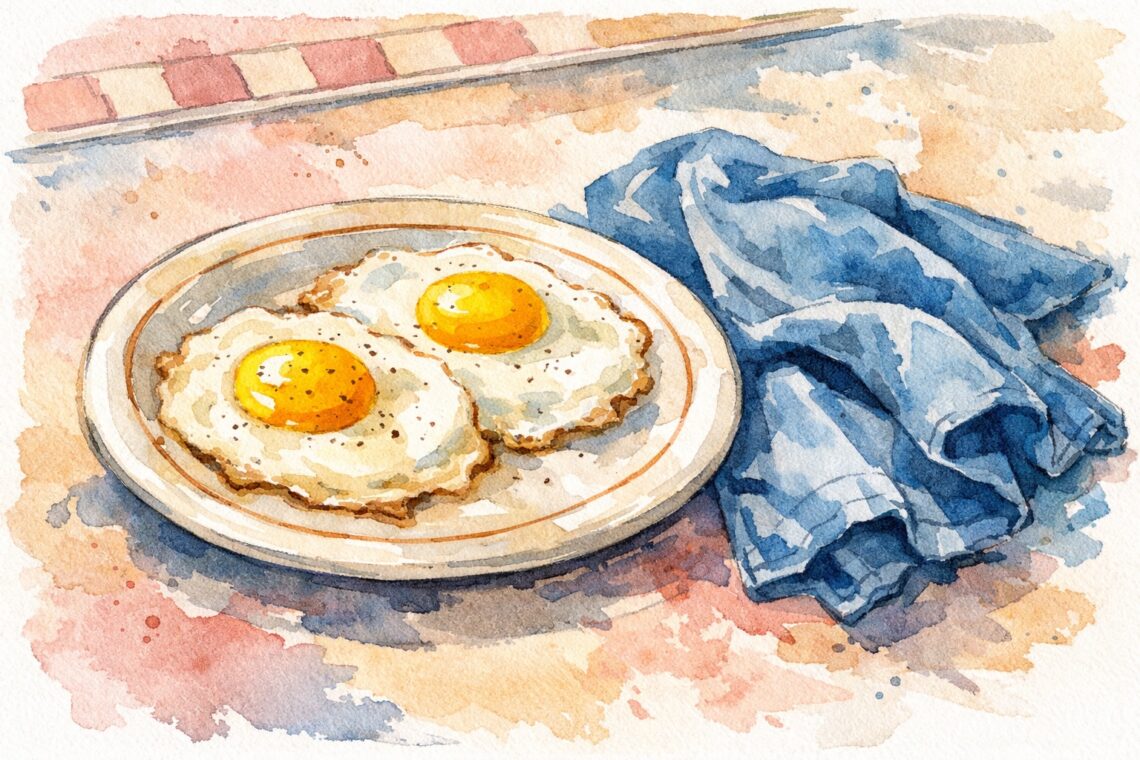
A clink of silverware and thud of dishes announced the delivery of our order. So much food. The tiny table overflowed with plates: toast, bacon, grits, hash browns, waffles. And cheerful sunny-side-up eggs.
“Have you met any new folks?” I asked, knowing that many of his old friends had passed.
He looked down at his plate, studying the hash browns that he had pushed into a miniature mountain with his fork.
“Not really,” he said. “Just don’t …” His voice trailed off. My heart sank. There were so many new name plates on his neighbors’ doors.
“Maybe you just don’t feel like getting dressed some days?” I asked. He nodded.
The sunny side of life
We finished up. Richard paid the check while I helped Roger pull his coat back on.
As we walked by the elderly couple to my back, Roger paused, put his hand on the stranger’s shoulder and asked, “How are you doing today?”
The man’s eyebrows rose in surprise. Then he looked up at Roger for a moment and smiled. “Fine, sir. Just fine.”
“Did you like your meal?” asked Roger.
“Oh, yes,” the man replied. “Always good!”
Then Roger turned to the cook, who stood by a sizzling griddle wiping his moist forehead. His black apron was splashed with flecks of batter and grease.
“And thank you, sir!” Roger said, lifting his cane to point in the cook’s direction. “That breakfast was exceptional! You the man!”
The cook’s eyes widened. Then he grinned. “Thank you, sir. Appreciate that. You have a good day and come back and see us.”
Roger tipped his red fedora, took my arm, and tapped his cane.
I paused, looked up at him, and smiled.
It dawned on me that I had been carefully cataloging all the losses. Meanwhile he continued to actively engage in helping others to feel seen.
“Let’s go, Claudine,” he said, tugging my arm. I kissed his cheek, tasting a bit of lingering syrup.
For more stories about life’s interruptions, check out my posts. When crying means proof of life: Crying Time. Or when one’s beliefs get shaken up Hometown Hero. Or when a lesson on grit comes covered in peach juice. Pits and Grit
If these stories resonate, join the discussion!
And as always, thank you for reading!


4 Comments
Anonymous
We all need to learn to not count the losses and choose to accent the positives! My mother who was hard of hearing and nearly blind would walk down the street to deliver the newspaper to the “old” lady who lived down the street from her. She was being neighborly,but It kept her active and strong.
Wendy Lenz
How wonderful that your mother did that! It is another aspect of aging — isolation. Your mom figured that part out as well. Thank you so much for reading and reaching out!
John
This is such an excellent story, I feel like I’m with you and Richard, listening in while sliding on the Waffle House floor as we are walking in. Thank you for writing this! I said all of Roger’s quotes in my head using his voice.
Wendy Lenz
Thank you, John! Thank you for reading! I’m so grateful!
You know, sometimes we get frustrated with the stories that seem they are on repeat, and we are unsure of the best next steps to take for aging loved ones. In the midst of all that, there are still lessons that one’s personhood is usually very much intake, even though it may be hiding behind a shaky memory.
Hugs to you! 🤗